A New Era of Development and Technical Ambition
The development of Grand Theft Auto VI began back in 2015, with Rockstar Games focusing on a single-player narrative designed for high replayability. The sheer scale of this project is staggering. The development team has more than doubled since the creation of Red Dead Redemption 2, and now includes a dedicated unit focused exclusively on crafting the most realistic and diverse non-player characters (NPCs) ever seen in a game. This commitment to authenticity extends to the world itself. Rockstar conducted extensive field research across Florida, interviewing locals, police officers, ex-criminals, and even gun dealers to capture the unique essence of the state of Leonida.
This dedication to detail is visible everywhere. Over 50 real-world street artists were commissioned to paint murals across the game world, lending an unparalleled authenticity to its urban landscapes. Fictional in-game brands have also been given more developed identities, creating a more cohesive and believable universe. The technical prowess doesn’t stop there. To refine car handling, Rockstar brought real race drivers into the development team. The result is a more nuanced and realistic driving experience.
On the performance front, GTA 6 is reportedly targeting 30 FPS at launch on consoles, with no high-performance mode for the PS5 Pro confirmed yet. This decision likely supports the game’s immense density and fidelity. The game boasts an incredible leap in animation, with over 600,000 animations compared to 55,000 in GTA V and 300,000 in RDR2. These animations are dynamically retargeted to fit different body sizes, allowing characters of all builds to interact naturally with their environment. Player movement has also been completely reworked, offering smoother transitions between walking, running, jumping, and climbing.
A Tale of Love and Crime in Leonida
The narrative of Grand Theft Auto VI draws inspiration from crime classics like *Miami Vice*, *Scarface*, and *The Getaway*. It aims to evoke the high-stakes action of 1970s-1990s cinema, weaving a tightly directed story rather than a freeform RPG experience. This structure is designed to encourage repeated playthroughs, allowing players to discover new details and outcomes. The line between main story missions and open-world activities is deliberately blurred, creating a seamless experience where your actions in free roam can directly impact the narrative.
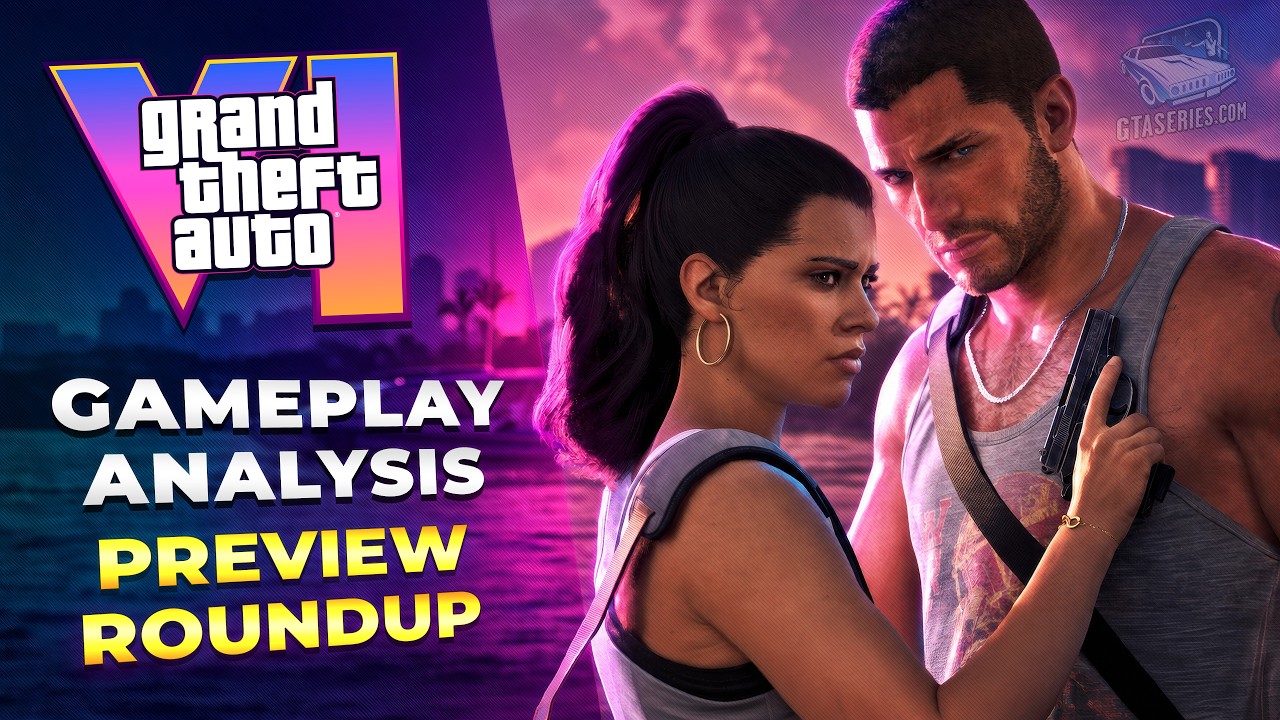
The story centers on Jason, a former soldier turned drug runner, and Lucia, a fighter recently released from prison. Their journey unfolds as a Bonnie-and-Clyde-style crime romance. Interestingly, Rockstar originally considered featuring four playable protagonists before settling on this dynamic duo. Lucia marks a milestone for the series as the first female lead in a mainline GTA title. Early in the story, she wears an ankle monitor, a detail that plays a significant narrative role.
The campaign’s length is said to be comparable to that of Red Dead Redemption 2 and is structured into chapters. One developer’s playthrough, covering the main story and significant side content, reportedly lasted around 80 hours. Players will face choices where minor decisions accumulate into larger outcomes, while major choices trigger immediate and impactful consequences.
Dynamic Duo: How Partner Mechanics Reshape Gameplay
The relationship between Jason and Lucia is at the core of the GTA 6 gameplay. The classic character wheel returns but with a new twist: players can choose to play as Jason alone, Lucia alone, or control both characters together. When the pair is united, switching between them is nearly instantaneous, but it takes longer when they are apart. During missions, this switching mechanic can be restricted, freely allowed, or even automated depending on the scenario, creating dynamic tactical opportunities.
You can call or text your partner to hang out, explore the world, or team up for robberies. They may even suggest activities or jobs while you’re exploring together. This partnership extends to vehicle gameplay, where you can let your partner drive while you focus on shooting from the passenger seat. During police escapes, the duo can split up, allowing one character to deliberately draw police attention while the other makes a getaway. Should either partner be captured, a “Busted” respawn screen appears for them, but the other remains active and must continue to flee the police.
A Living, Breathing World
Life in Leonida is rich with detail. Jason and Lucia follow independent daily routines when not controlled by the player—waking up, drinking coffee, showering, and exercising. They can share a safehouse, which functions similarly to the camps in RDR2, with other characters naturally coming and going. While players can’t purchase new safehouses, which are either already owned or unlocked through missions, they can buy new garages to expand their vehicle collection.
The game also introduces a fitness and nutrition system. Gym workouts and exercises directly affect physical attributes and musculature, while excessive food consumption can lead to visible weight gain. Physical training permanently boosts base Health and Stamina, and poor fitness can make demanding missions or escapes more challenging. Food and energy drinks provide healing and temporary stat boosts, adding another layer of strategy to preparation.
The Art of the Heist: Robberies and the Law
The criminal element is more sophisticated than ever. A new Criminal Profile system, similar to RDR2’s Honor system, measures the social acceptability of your actions. Good deeds, like petting an animal or throwing away trash, are marked by a smiling icon with a halo, while bad deeds feature a sneering face with horns. This profile rating alters NPC responses, unlocks certain weapons, and can even impact the story. Extreme actions can lead to permanent changes in your criminal status.
Money carries significant narrative weight, with some missions locked until you’ve raised sufficient funds. It is stored in three forms: bank balances, duffel bag cash, and physical wallet cash, the latter of which can be lost upon death. Income is earned through a variety of criminal enterprises, including selling stolen cars, robbing stores, running bank heists, and dealing drugs.
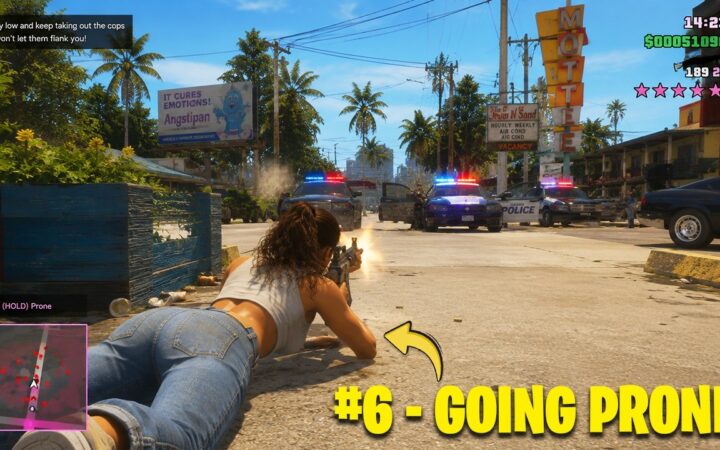
The 6-star wanted system makes its return, promising intense police pursuits. A 3-star wanted level is tough to escape in dense urban areas, while 6 stars trigger a map-wide tactical manhunt. Police are more strategic, establishing containment perimeters instead of simply rushing in, forcing players to find alternative exits. They also no longer appear on the minimap, requiring players to rely on their environmental awareness. Law enforcement will track you based on your facial identity, clothing, and vehicle, making masks and quick changes essential for breaking recognition.
Refined Combat and an Immersive User Interface
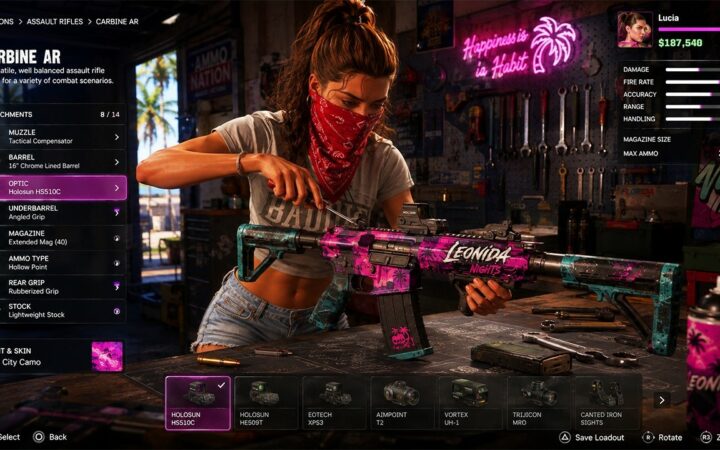
Combat in GTA 6 has seen a major overhaul. Weapons are now physically carried by the protagonists instead of being pulled from an invisible inventory. The system emphasizes cover mechanics, allowing players to duck behind furniture, vault over vehicles, and strategically reposition during shootouts. Non-lethal combat options have been expanded, letting you shoot limbs to incapacitate enemies or shoot their weapons to disarm them.
Jason possesses a special “Focus” ability that slows time and highlights weak points on vehicles and enemies, coded by color: red for lethal zones, yellow for a stun, and white for a simple hit or disarm. Like in RDR2 and Max Payne 3, the final enemy kill triggers a slow-motion kill cam, which can be toggled off for players who prefer faster-paced action.
The user interface follows RDR2’s minimalist approach, with a weapon and item wheel for quick selection. The HUD, which can be minimized or disabled entirely, features meters for Health, Stamina, Focus, and an underwater O2 meter. The minimap can be displayed in 3D or as a flat 2D map, with GPS routes colored pink for clarity. Following a GPS route may even automatically activate your vehicle’s turn signals, providing visual directions without needing to glance at the map.
Grand Theft Auto VI is shaping up to be a monumental leap forward, not just for the series but for open-world gaming as a whole. The sheer depth of its interconnected systems promises a level of immersion and player agency that seems truly next-generation.
To see all these details and more, watch the full analysis video below.