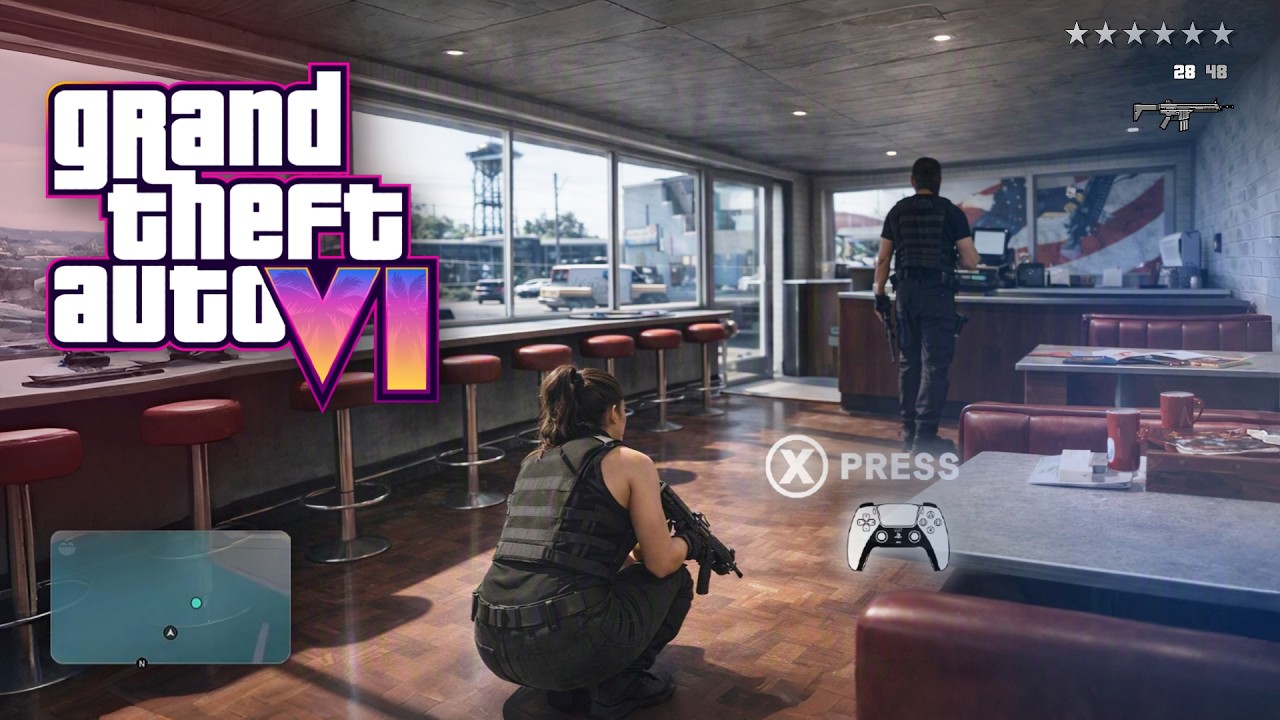
A New Era for Open-World Immersion
For years, Rockstar Games has chased a singular goal: to erase the lines between the player and the world. With each Grand Theft Auto entry, that world became larger and more detailed, but technological hurdles always remained, particularly when it came to building interiors. Past consoles could only handle so much, often leaving vast cityscapes with countless doors that remained firmly shut. But that’s about to change. The technology powering the next generation has finally caught up to Rockstar’s ambition, and the initial look at the **GTA 6 interiors** confirms it. The game is set to feature an astounding 700 enterable locations, a number that promises to redefine immersion in the series.
This isn’t merely about adding more shops or apartments. It represents a philosophical shift in world design. Instead of a beautiful but sometimes superficial playset, Vice City is shaping up to be a deeply layered environment where almost every door is an invitation to a new space, a new story, or a new gameplay opportunity. From sprawling skyscrapers and hotels to humble convenience stores and gang hideouts, the world of GTA 6 is designed to be explored inside and out.
The Living Underbelly of Vice City
One of the most impressive early examples is the Sanford Gang Complex. Here, the transition from the bustling street to the building’s interior is completely seamless. Jason and Lucia simply walk through the front doors into a lobby that feels genuinely alive. NPCs aren’t just static props; they’re leaning against walls, chatting with each other, and listening to music, creating a palpable atmosphere that extends from the world outside. This is a space with a purpose, not just a corridor leading to a mission trigger.
Upstairs, the attention to detail becomes even more granular. The gang’s multi-room hideout serves as a masterclass in environmental storytelling. Tables are cluttered with the tools of an illicit trade: mortars, pestles, baking soda, and other cutting agents, all branded with Rockstar’s signature satirical humor. The lighting is particularly noteworthy, with ray-traced global illumination bouncing realistically off the grimy tiles and messy countertops. It makes the hideout feel like a real, lived-in location rather than a sterile video game set. Even player interaction has evolved, with a new contextual dialogue system that allows for more nuanced approaches than simply drawing a weapon.
Dynamic Robberies and Interactive Shops
Not every interior is a sprawling complex. The leaks also showcase smaller-scale locations, like convenience and electronics stores, which are equally packed with detail. Every shelf is stocked with unique products, and the stores themselves are fully interactive. During a robbery, Lucia can manage the clerk and the cash terminal, with the entire system tying into the game’s broader banking and ATM mechanics. This suggests robberies will be more dynamic and integrated than ever before.
A crucial quality-of-life improvement is the updated minimap. As soon as a player enters a building, the map switches to a clear blue layout, displaying the interior’s rooms, walls, and exits. This feature will be invaluable during hectic getaways, allowing players to plan their escape routes on the fly when the police arrive.
Destructible Environments and Vertical Exploration
The Ventura Apartments in Rockridge demonstrate another major leap forward: destructibility. During a chaotic DEA shootout, the environment reacts dynamically to the firefight. Bullets tear chunks from the walls, chipping away at plaster, drywall, and concrete. This not only heightens the visual spectacle but also adds a tactical layer to combat, as cover can be degraded or destroyed over time.
These apartment buildings also highlight a new emphasis on verticality. The minimap intelligently tracks which floor the player is on, updating the layout in real-time as they move up or down stairs. The world feels more three-dimensional and complex, a feeling reinforced by dynamic events like a failing elevator, which forces Jason and Lucia to find an alternative escape route through a window.
More Than Just Four Walls: A Deeper Look at GTA 6 Interiors
The level of detail extends to the player’s personal spaces. Jason and Lucia’s safehouse in Crosstown is filled with narrative touches, from a Fleeca Bank fridge magnet to a picture that references the original Vice City. These interiors are also highly functional. Players can grab snacks from the fridge to restore health, and the phone interface is now diegetic, zooming into the character’s hand rather than covering the screen with a menu. In Port Gellhorn, a video game store called Game Hoard is another fully realized retail space, complete with parody consoles and games. Players can even purchase equipment like earbuds and headphones, which will directly affect how they experience the game’s audio.
Ultimately, the **GTA 6 interiors** are shaping up to be far more than just enterable buildings. They are intricate, interactive, and deeply woven into the fabric of the game world. They offer new gameplay systems, tell their own stories, and create a level of immersion that was previously impossible. If these few locations are any indication of what the other 700 doors are hiding, players are in for an unprecedented open-world experience.
See these incredible details come to life in the full video breakdown.